


Biomass as a modern energy fuel – types, applications and importance in the energy transition
Biomass as a modern energy fuel – types, applications and importance in the energy transition
Biomass as a modern energy fuel plays an increasingly important role in the European and global energy sector. In the face of rising fossil fuel costs, tightening environmental regulations and efforts to reduce CO₂ emissions, biomass has become a real and stable alternative to coal and other traditional energy sources. Its use includes both electricity generation and heat production in industrial and municipal installations.
What is biomass and why is it gaining importance?
Biomass as a modern energy fuel is a renewable energy source of organic origin, including plant materials, wood waste and by-products of the agricultural industry. Unlike fossil fuels, biomass is considered carbon-neutral, as the amount of CO₂ emitted during combustion corresponds to the amount absorbed by plants during their growth.
The main reasons for the growing importance of biomass include:
- compliance with EU climate policy
- the possibility of partially replacing coal
- greater supply stability compared to fossil fuels
- wide range of technological applications
- use of waste raw materials
Biomass as a modern energy fuel in power generation and industry
Biomass is used in many sectors of the economy. The largest consumer of biomass is the professional and industrial power sector, where it is used in energy boilers, combined heat and power plants and cogeneration installations.
In practice, biomass is used for:
- production of electricity
- generation of process heat
- co-firing with coal to reduce installation emissions
- supplying local heating systems
Thanks to its flexibility, biomass can be easily adapted to existing energy infrastructure, significantly reducing transformation costs.
Types of biomass used in the energy sector
Woody biomass
Woody biomass is one of the most commonly used types of biomass. It includes both processed and unprocessed materials originating from the wood industry and energy crop plantations.
The most commonly used forms of woody biomass are:
- wood pellets
- wood briquettes
- wood chips
They are characterized by high calorific value, stable combustion and low ash content, making them attractive fuels for industrial installations.
Wood pellets
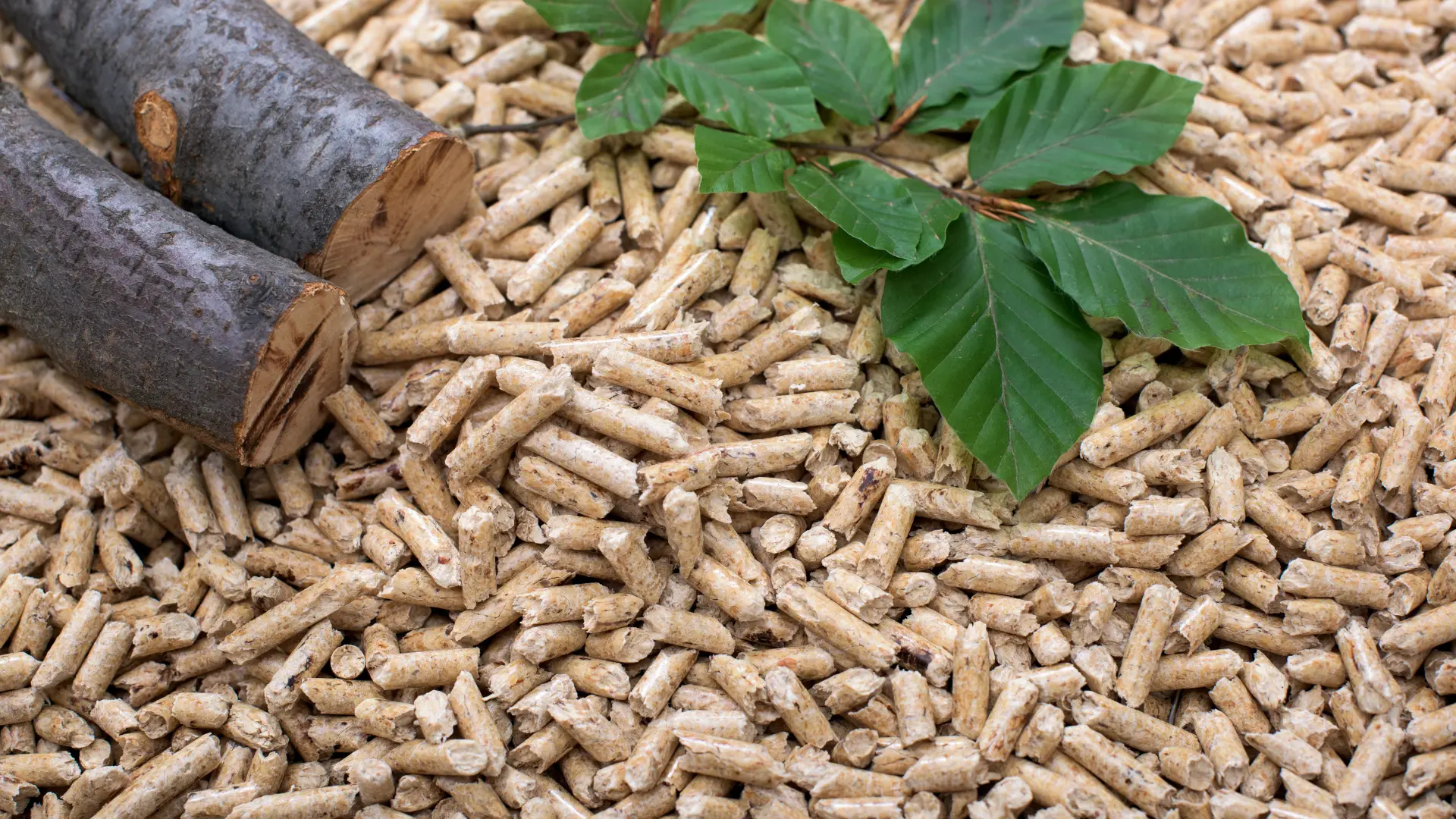
Wood pellets are considered one of the most efficient biomass fuels. High energy density, uniform granulation and low pollutant emissions make pellets suitable for both large industrial plants and smaller heating systems.
Key advantages include:
- high calorific value
- low ash content
- easy transport and storage
- stable quality parameters
Wood briquettes
Wood briquettes are produced from compressed sawdust and wood waste without the use of chemical binders. They are a fully natural fuel characterized by high thermal efficiency and long burning time.
Due to their properties, briquettes are used in:
- industrial installations
- heating plants
- manufacturing facilities requiring a stable heat source
Agricultural biomass pellets
Pellets made from sunflower husks and grain biomass are gaining popularity as an excellent example of using agricultural waste in energy production.
Agricultural biomass is characterized by:
- good raw material availability
- competitive pricing
- high energy efficiency
- environmental neutrality
Agricultural biomass pellets are used both in industry and in medium-capacity heating installations.
Wood chips
Wood chips are biomass in the form of fragmented wood, originating from forestry residues, green area maintenance and energy crops. This raw material is mainly used in large-scale energy installations, where volume and supply continuity are crucial.
Their main features include:
- low acquisition cost
- possibility of combustion in large quantities
- flexibility of use
Quality parameters of biomass
For biomass to be efficiently used in energy processes, it must meet specific technical requirements. Key biomass parameters include:
- calorific value
- moisture content
- ash content
- degree of fragmentation
- raw material homogeneity
The stability of these parameters directly affects installation efficiency, combustion safety and operating costs.
Biomass as a modern energy fuel – the raw material of the future
Biomass is currently one of the pillars of the energy transition. It can effectively support industrial decarbonization while providing a stable and predictable energy source. Its development does not require a complete reconstruction of energy infrastructure, making it a practical and economically viable solution.
In the coming years, the importance of biomass will continue to grow, especially in sectors where full electrification of processes is not possible.
Summary
Biomass as a modern energy fuel is a versatile, renewable and efficient energy resource widely used in the energy and industrial sectors. The variety of available forms – from wood pellets and briquettes to agricultural biomass – allows precise fuel selection tailored to the needs of a specific installation.
In the context of increasing environmental and cost requirements, biomass remains one of the most promising solid fuels of the 21st century.